NIDAR 2026
1st in Disaster Management. First place among 350+ teams across India, including IITs.
- Result
- 1st, Disaster Management
- Autonomy
- Fully autonomous
- Teams
- 350+ across India
- Organisers
- DFI and MeitY
- Venue
- Gautam Buddha University, Greater Noida
- Date
- January 2026
- Mission window
- 30 minutes, finished in under 15
1stin Disaster Management.
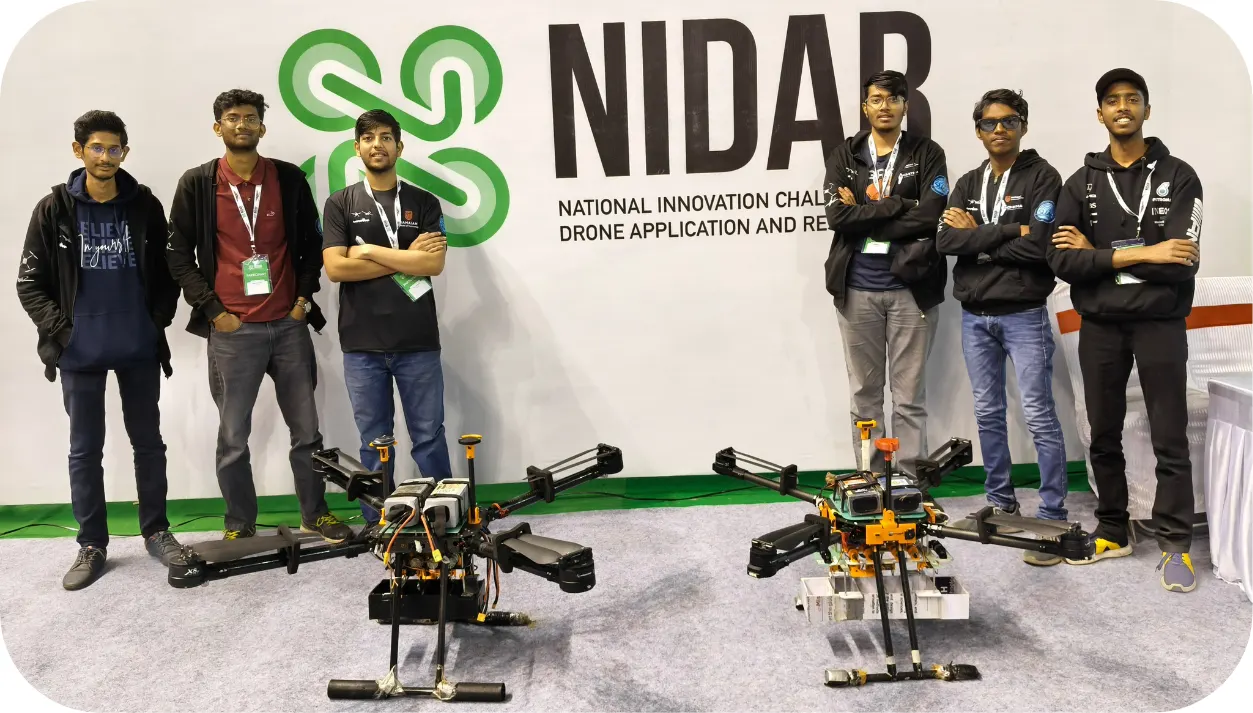
NIDAR, the National Innovation Challenge for Drone Application and Research, is organised by the Drone Federation of India and MeitY. Team Edhitha entered the Disaster Management category and won it, ahead of 350+ teams from across the country.
Our entry was a system of two drones sharing one mission state, each surveying half of the area and delivering to the survivors it found, all coordinated by a ROS pipeline built so that no two aircraft ever take the same task. The whole mission was flown fully autonomously, from take-off to landing.
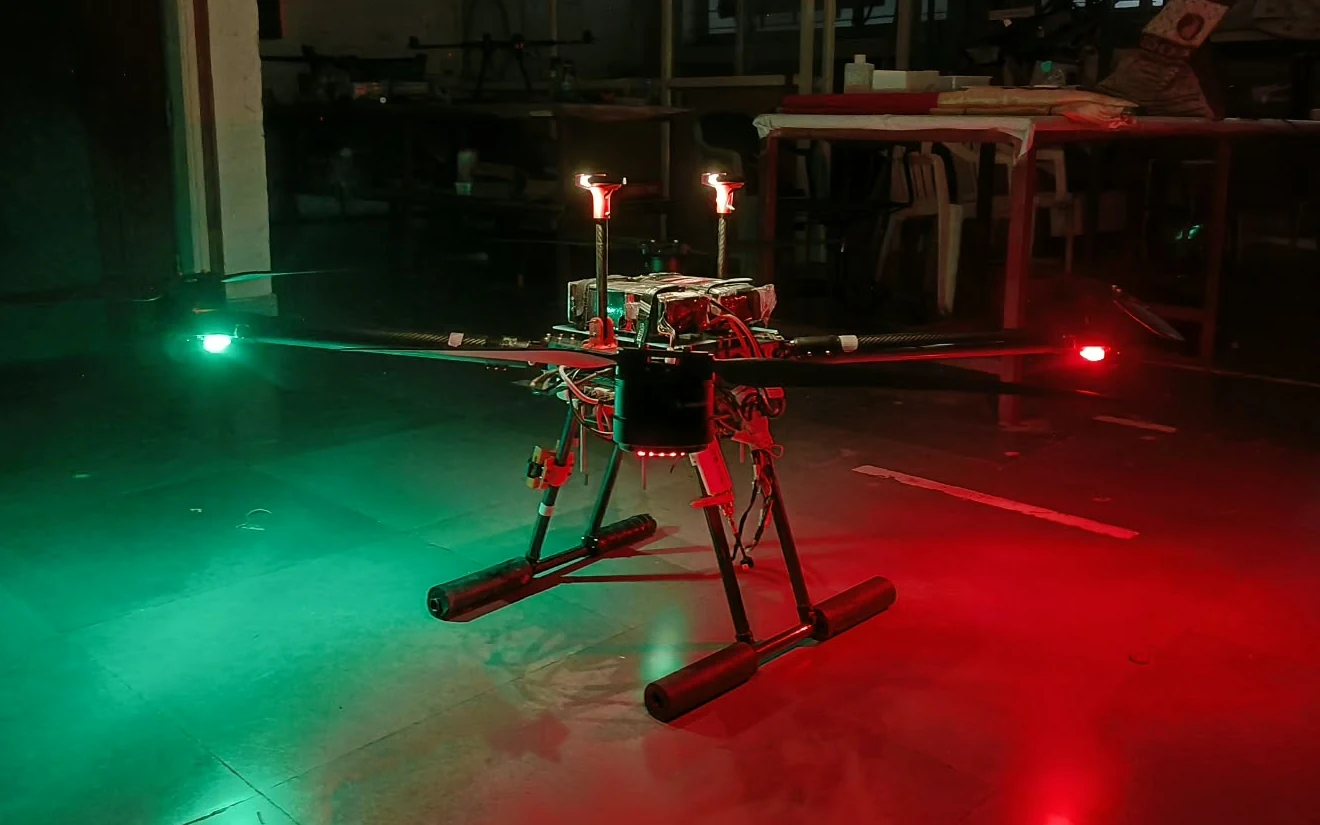 RudraThe larger drone. Surveys its half of the area and, with the longer endurance, delivers most of the payloads.
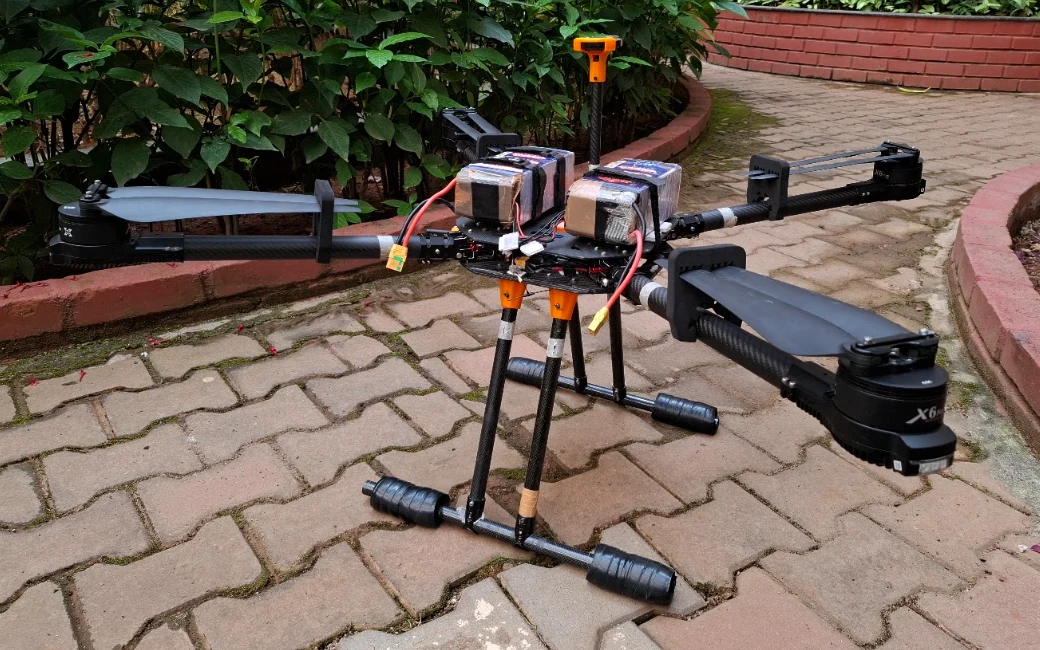 BarbarikThe smaller drone. Surveys the other half, delivers to the survivors it finds and lands first.
Both drones take off
Rudra and Barbarik take off together and fly the whole mission fully autonomously. The area is split in half and each drone gets a lawnmower survey path for its own half.
First detection
The vision model flags the first survivor mid-flight. The coordinate is geotagged and pushed to the shared mission state at once.
Survey complete
Each drone finishes its half, and every survivor found is in the shared mission state, so no target is ever taken twice.
First payloads dropped
Each drone flies to a survivor it found, repositions visually and releases a tethered payload smoothly.
Barbarik lands
Barbarik, the smaller drone, lands first. Rudra has the longer endurance and carries on with the remaining deliveries.
Mission complete
Every payload delivered, no duplicates, both drones home about 15 minutes in, with 15 to spare.